Historical Record · Dublin, 1935
Dublin’s Short-Lived Torch Theatre — The Face at the Window Programme
Torch Theatre, Capel Street
Catalogue details
Description
An original programme from the opening year of the Torch Theatre — a small surviving document of Dublin theatre, print, advertising and everyday city life in the mid-1930s.
- Date
- c. late 1935
- Place
- Torch Theatre, 114–116 Capel Street, Dublin
- Country
- Ireland
- Category
- Irish Ephemera · Theatre & Performance
- Extent / Pages
- 4 pp. on 1 folded sheet
- Dimensions
- Measurements gladly provided on request
- Production
- The Face at the Window — “Le Loup”
- Director of Productions
- Charles L. Keogh
- Reference
- TBH-IRL-THEATRE-1935-TORCH
- Medium
- Original folded theatre programme, printed on all four pages
- Condition
- Please consult the photographs for condition. Additional photographs are available on request.
Shipping quoted by destination before payment
Historical context & sources
Context, attribution and documentary significance.
The Theatre
A theatre that existed for only six years.
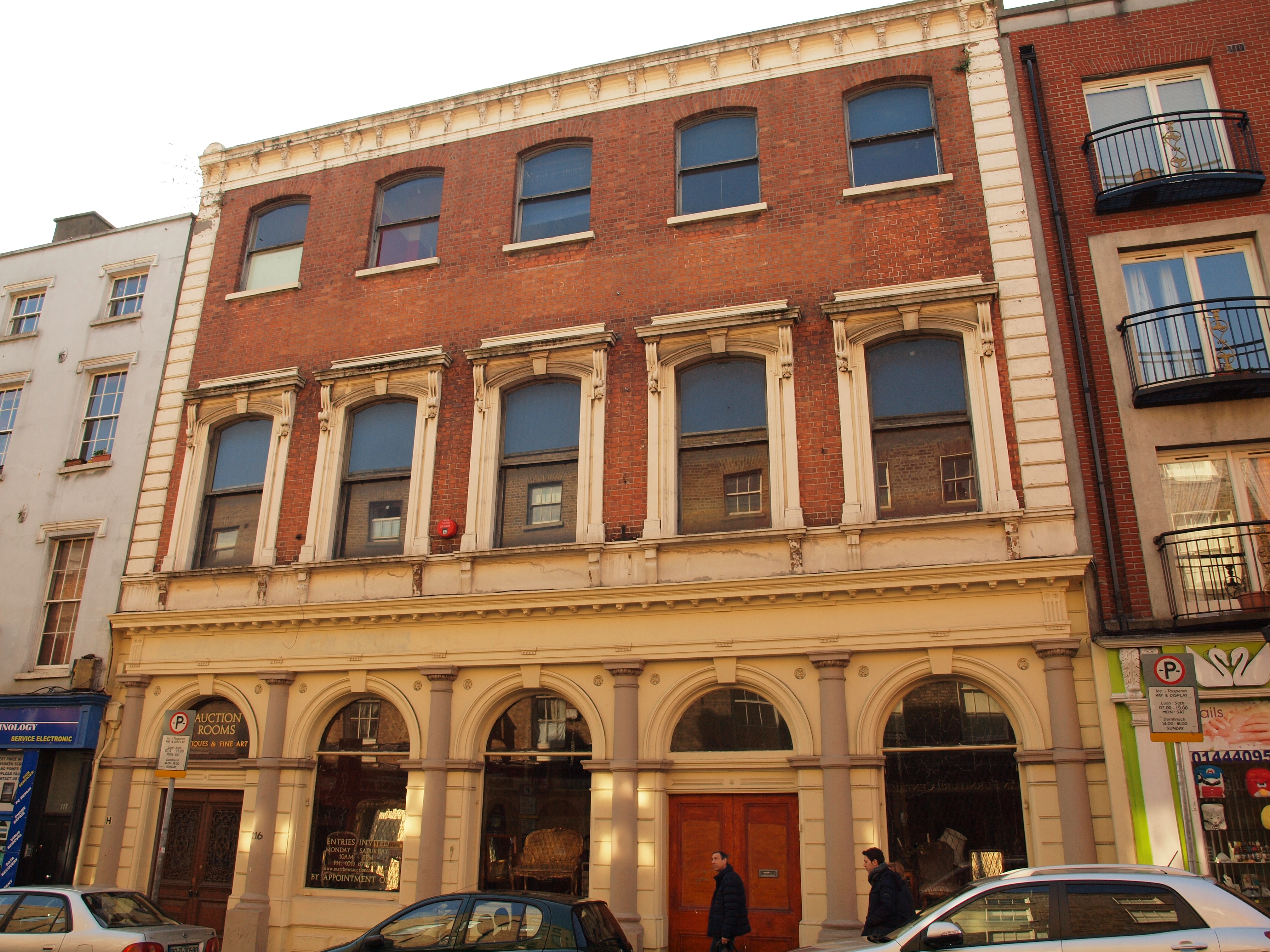
The Torch Theatre opened at 114–116 Capel Street on 27 February 1935. The premises had a much older civic life: the Victorian building had previously served commercial uses and later as the headquarters of the United Trades Council and Labour League before its conversion for theatre. In October and November 1935, Jennifer Davidson — actress, theatre organiser and one of the venture’s central figures — was corresponding with government departments about securing a theatre patent and described a 400-seat house devoted to “legitimate drama”.
The Torch specialised initially in melodrama, historical drama and popular theatre. Its existence was precarious. Stage productions ended in 1940; the building continued for a time as a cinema and the Torch closed completely in 1941. That brief lifespan is central to the documentary importance of surviving programmes.
Dublin, 1935 · The Time Capsule
A city between older traditions and modern mass entertainment.
In 1935 Dublin was the capital of the Irish Free State, still carrying the social and economic strains of the inter-war years. Housing remained a severe urban problem: contemporary and later research records large numbers of Dublin families living in overcrowded one-room tenements even as municipal housing and slum-clearance programmes expanded.
At the same time the city’s entertainment culture was unusually active. The Abbey Theatre finally staged Seán O’Casey’s The Silver Tassie in August 1935, seven years after the play had been rejected there. The Gate continued to bring international and experimental drama to Dublin. The new Theatre Royal opened in 1935 as a vast cine-variety palace, while the 1,500-seat Green Cinema opened on St Stephen’s Green that December. The Torch belonged to this same crowded world, but at the opposite scale: a small, semi-professional house on Capel Street trying to sustain live drama amid rapidly changing tastes.
The programme therefore records more than a performance. It sits at the intersection of theatre and cinema, popular melodrama and modernist drama, commercial Capel Street and Dublin’s wider cultural life.
Dating the Programme
The reverse carries the evidence.
The programme announces forthcoming productions of The Boys of Wexford, Father Murphy and Nell Gwynne. Academic research on the Torch identifies Father Murphy and Nell Gwynne among five productions in the theatre’s second season and cites a December 1935 contemporary notice. This makes a date in the later part of 1935 highly plausible.
The reverse also advertises P. J. Byrne at 110 Capel Street — described as “next door to Torch Theatre” — promoting Guinness and Power’s liqueurs. It is precisely this accidental survival of neighbouring commerce that turns ephemeral theatre printing into a fragment of the street itself.
The Play
The Face at the Window — “Le Loup”.
F. Brooke Warren’s The Face at the Window was a late-Victorian detective melodrama first staged in the 1890s and later adapted for cinema. Its sinister criminal figure, “Le Loup” — the Wolf — belonged to the kind of sensational popular theatre that the early Torch consciously revived for Dublin audiences.
The result is a programme that looks backwards and forwards at once: a 1935 Dublin theatre reviving the language of Victorian melodrama while competing in a city increasingly shaped by modern cinema.
Survival & Rarity
More archive than commodity.
No second copy of this exact programme has been located in our current web and open-market searches. That is not a claim that another example cannot survive. Institutional holdings confirm that Torch material does survive: the National Gallery of Ireland catalogues a small group of eleven Torch Theatre playbills dating from 1935–1938 in the Anne Yeats gift.
The distinction matters. The significance of this object is not created by an absence of search results; it comes from the short life of the theatre, the fragility of the format and the unusually dense amount of historical information preserved on a single sheet.
Related Journal Essay
The Torch Theatre, Capel Street: A Brief Dublin Stage
A research-led history of the theatre’s opening in 1935, its patent, repertoire, surviving playbills and the documentary value of this programme.
This catalogue record treats the object as a historical time capsule rather than an isolated retail listing. Further source notes, high-resolution images and condition photographs are available on request.