
Baggot Street Hospital, 1904: Richard Atkinson Stoney and the Working Life of Dublin Surgery
A hospital built into Dublin’s streets, a young surgeon beginning his career and an ordinary-looking diary that preserves the rhythms of Irish medicine at the turn of the twentieth century.
A hospital on the street, not apart from the city
In Edwardian Dublin, the Royal City of Dublin Hospital was part of the daily life of Baggot Street. Its brick-and-terracotta frontage stood among houses and commercial premises, rather than on a remote medical campus. The institution had begun in 1832 as the City of Dublin Hospital. By the 1890s its growth demanded new accommodation, and the façade associated with architect Albert Edward Murray was completed in 1893. An account in The Irish Builder described the hospital’s charitable purpose and the pressure for additional beds.2
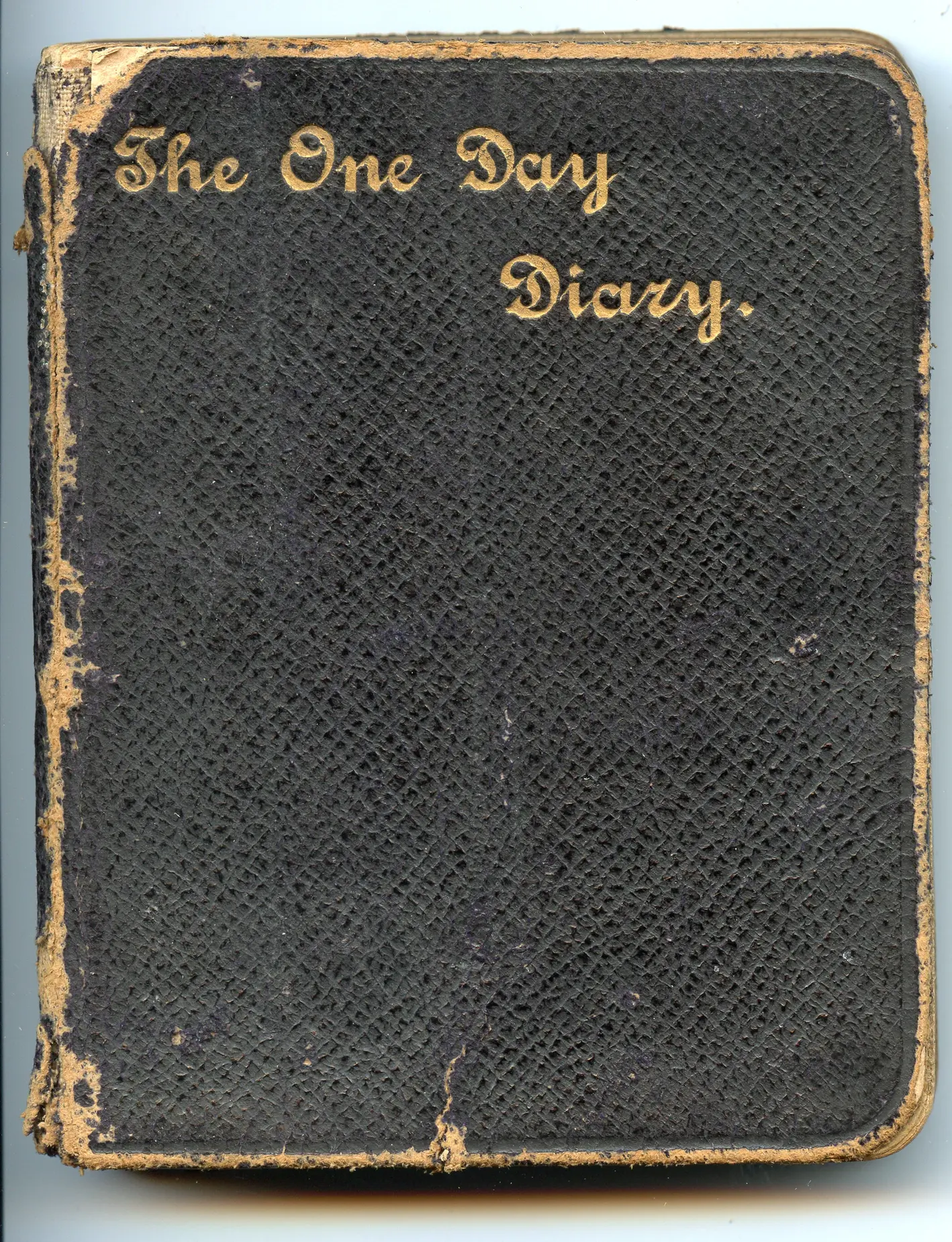
The building is one way into the story. The other is the work undertaken inside it: consultations, operations, committee business, training and research. These activities rarely survive in the same vivid form as a street photograph or architectural drawing. A handwritten working diary from 1904 provides a different kind of view, from the professional calendar of one of the hospital’s surgeons.
Richard Atkinson Stoney arrives at Baggot Street
Richard Atkinson Stoney (1877–1966) trained at Trinity College Dublin and qualified in 1901. His connection with Baggot Street began while he was still a medical student; in 1903 he was appointed visiting surgeon at the Royal City of Dublin Hospital. The Dictionary of Irish Biography places that appointment at the beginning of a career that would later include wartime surgical service and leadership of Ireland’s medical institutions.1
That chronology makes 1904 particularly revealing. Stoney was not yet the senior figure remembered in later histories. He was a recently appointed surgeon in his twenties, moving between the hospital, professional meetings and a private address at 115 Lower Baggot Street. In a working diary, the large events of a career have not yet been sorted into a biographical narrative. A clinical engagement can appear beside a committee meeting or a journey, each entered because it mattered on that particular day.
The distinction between City of Dublin Hospital and Royal City of Dublin Hospital also matters in archival research. The Royal College of Physicians of Ireland catalogues annual report volumes under the hospital’s history, including a series covering 1902–1913. Those reports document an institutional record alongside the private papers of practitioners.3
1904: anatomy in print and surgery in manuscript
In July 1904, the Journal of Anatomy and Physiology published Stoney’s The Anatomy of the Visceral Pelvic Fascia. The article identifies him with both the Royal City of Dublin Hospital and Trinity College Dublin. It survives in digitised form through the United States National Library of Medicine’s PubMed Central archive.5
In the original 1904 diary now catalogued by Ten Bells Auction House, an entry dated 29 January refers to pelvic-fascia anatomy alongside Royal Academy of Medicine business. It is a notable chronological connection: the manuscript contains a contemporary reference to the subject of a paper published later that year. The entry should not be treated as a draft of the article, or as proof of any particular stage of its composition. It is evidence that the topic occupied Stoney’s working calendar.
Elsewhere, the diary records operations and hospital responsibilities in the abbreviated language of a practitioner writing for himself. Such entries differ fundamentally from the polished voice of a journal article. They capture the work of arranging, remembering and carrying out surgical practice. Because they may touch on individual patients, the surviving manuscript also calls for discretion: the historical interest does not require the public reproduction of entire clinical pages or identifiable personal details.
What the photographs and hospital archives preserve
Photographs give Baggot Street’s medical history a visible setting. The National Library of Ireland holds a glass negative of the Royal City of Dublin Hospital attributed to Robert French, in the William Lawrence photographic collection. Its catalogue gives a broad date range rather than a precise day, so it should not be presented as a photograph of the hospital in 1904 specifically.4 The image nevertheless belongs to the visual record of the institution in the decades surrounding Stoney’s appointment. For the broader work of the studio, see our Journal essay on William Lawrence and Robert French.
Administrative evidence survives as well. The National Archives of Ireland lists the Baggot Street Hospital collection under reference PRIV/1272, with access considered case by case. Hospital archives may include sensitive information, and the National Archives explicitly distinguishes their access conditions from those of ordinary State papers.7 These institutional collections and the surviving private diary offer different, complementary views of the same medical world.
The existence of such records also helps explain why original medical manuscripts are more than biographical curiosities. RCSI’s Heritage Collections preserve manuscripts, antiquarian books, instruments and institutional papers as evidence of the development of medicine and surgery in Ireland.8 A working notebook or diary occupies the intimate end of that documentary spectrum.
From a working year to an institutional career
Stoney’s later career took him well beyond the Baggot Street operating theatre. During the First World War he served with French medical services; the Dictionary of Irish Biography records his subsequent work with gunshot injuries in Dublin during the Irish Civil War. He was eventually President of the Royal College of Surgeons in Ireland from 1930 to 1932, a term confirmed by RCSI’s official presidential chronology.16
Those later achievements give the diary biographical significance, but they should not eclipse its immediate subject. In 1904, the entries concerned a young doctor’s practical obligations in a busy Dublin institution. The hospital’s architecture, the scholarly article published that summer, the photographic views and the administrative archives establish the public setting. The diary adds a private working sequence: what was scheduled, what demanded attention and what was worth writing down.
Read together, these records make the history of the Royal City of Dublin Hospital less abstract. They show how the story of an Irish medical institution can be reconstructed from different kinds of surviving material, without confusing a later reputation with the daily work that preceded it.
Related material currently available
Richard Atkinson Stoney — original Dublin medical and surgical working diary, 1904 · €1,250 · one original manuscript volume. Contemporary inscriptions identify Stoney and his Lower Baggot Street address; dated entries connect hospital appointments, operations and professional research. The original is offered as a complete working diary, not as detached pages.
View the diary, condition notes and catalogue photographs → · Explore Irish Ephemera & Manuscripts →
Sources and further reading
- Dictionary of Irish Biography, “Stoney, Richard Atkinson” — Stoney’s education, 1903 hospital appointment, later war service and medical leadership.
- Archiseek, “1893 — Royal City of Dublin Hospital” — The Victorian building and the 1892 Irish Builder account of hospital expansion.
- Royal College of Physicians of Ireland, Royal City of Dublin Hospital records — Surviving annual report volumes, including 1902–1913.
- National Library of Ireland, Robert French photograph of the Royal City of Dublin Hospital — Lawrence Collection glass negative recording the hospital’s exterior.
- R. Atkinson Stoney, “The Anatomy of the Visceral Pelvic Fascia” (1904) — Contemporary published research naming the Royal City of Dublin Hospital and Trinity College Dublin.
- RCSI, “Presidents of RCSI” — Official record of Stoney’s 1930–1932 presidency.
- National Archives of Ireland, “Hospital collections guide” — Baggot Street Hospital archives and the access restrictions applying to medical records.
- RCSI, “Heritage Collections” — Institutional context for the preservation of Irish medical manuscripts, archives and artefacts.
- National Library of Ireland, “Royal City of Dublin Hospital: 150th Anniversary, 1832–1982” — Bibliographic record of a 1982 institutional history.