Ten Bells Auction House · Institutional Collection Record
Sweden · Apiculture · Travel · Association Life · c.1928–1944
Swedish Beekeeping History — The Wiktor Emil Rylander Photographic Collection
An intact Swedish photographic album strongly attributed through internal documentary evidence to Wiktor Emil Rylander, teacher and documented writer on apiculture. The album preserves photographs of beekeeping, national association meetings, travel, specialist correspondence and industrial production connected with Swedish apiculture.
Institutional statusSold by Ten Bells Auction House · National Library of Sweden, StockholmSold in October 2026 · No longer available for sale.
Datec.1928–1944
PlaceSweden
CategoryPrivate Archives & Collections
CountrySweden
MediumPhotographic album · original prints · printed portraits
DimensionsFull album measurements on request
Catalogue ReferenceTBH-ARC-RYLANDER-C1928-1944
StatusSold by Ten Bells Auction House to the National Library of Sweden · Stockholm
Collection summary
A coherent visual record of Swedish apiculture, travel and organised association life.
The album is preserved and presented as a single documentary unit. Its research value lies in the continuity between people, places, specialist interests, handwritten evidence and dated national meetings across the surviving sequence.
Public presentation is intentionally selective. Full page-by-page documentation and supporting research are retained with the collection.
Notable institutional sale · October 2026
Sold by Ten Bells Auction House to the National Library of Sweden, Stockholm.
Notable institutional sale · October 2026
Collection type
Intact photographic album
Research basis
Internal album evidence and supporting attribution
Subject range
Apiculture, travel, meetings, specialist contacts
Disposition
Maintained complete and undivided
29original photographs
3printed historical portraits
1intact album
1928–1944documented meeting span
Description & Historical Context
Internal evidence points strongly to Wiktor Emil Rylander.
The attribution rests on the album’s own evidence rather than on a later inscription alone. A preserved card is addressed directly to “Herr lärare W. E. Rylander – Sandbäck”; the album also contains repeated apiculture subjects, specialist contacts, national meeting photographs and travel sequences consistent with Rylander’s documented interests.
The collection is therefore described as Wiktor Emil Rylander’s personal / professional photographic album, while individual image-level interpretations remain appropriately cautious where direct identification is absent.
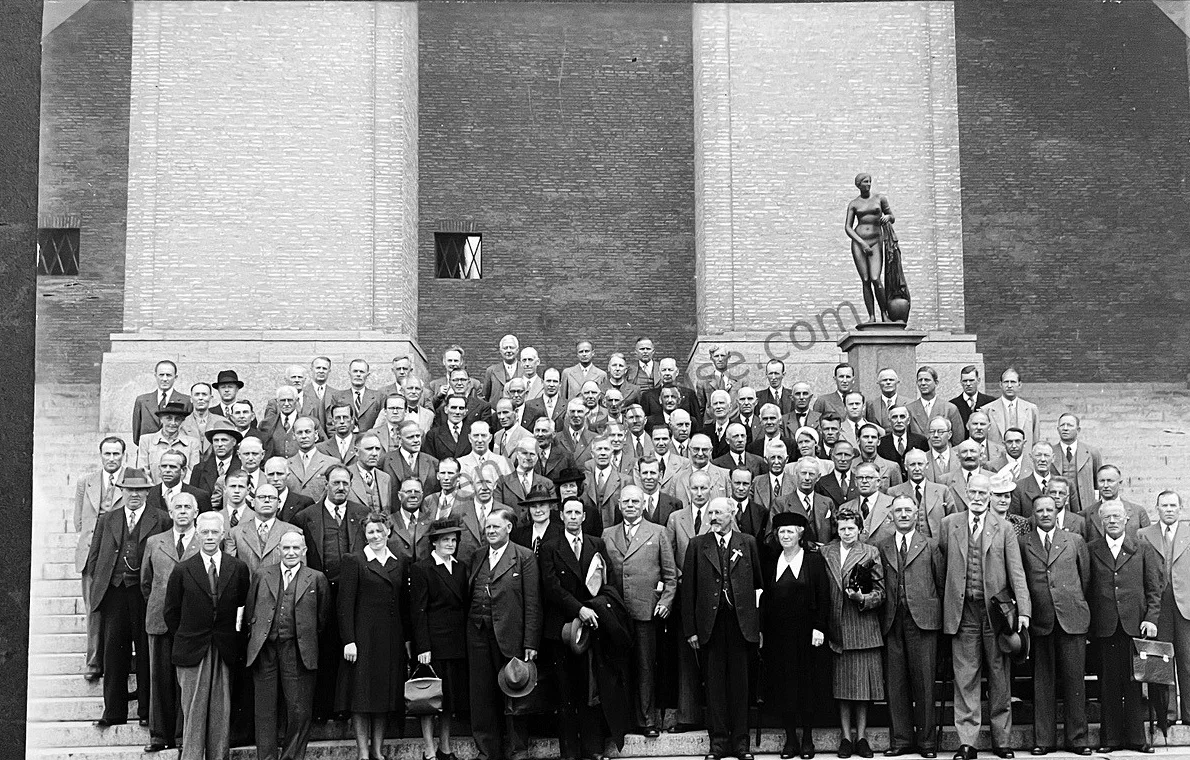
Göteborg / Bohus, 1944. Large original group photograph from the album’s later period, representative of the documented sequence of Swedish national beekeeping meetings preserved across 1928–1944.
Travel
Dalarna and the Siljan region.
The album includes a coherent landscape sequence from Rättvik, Leksand, Mora / Morastrand, Hemus, Saxviken, Vika and Gesundaberget. Several versos preserve handwritten place identifications, giving the travel group unusual documentary value.
Some photographs may relate to journeys connected with documented meetings at Falun in 1928 and 1934, although this cannot yet be established image by image.
Association Life
National beekeeping meetings across three decades.
Several large original photographs document national beekeeping gatherings in the late 1920s, 1930s and 1940s. Dated examples include Falun 1928 and Göteborg / Bohus 1944; the complete album also includes further meeting photographs from Falun 1934 and Borås.
Preserved together, the sequence forms a long visual record of representatives and organised association life within Swedish apiculture.
Networks & Industry
Specialist contacts and beekeeping material culture.
A preserved card refers to a Drottningodlingsstation, indicating contact with specialist queen breeding rather than hobby beekeeping alone. Another image group shows workers, timber, machinery and production.
Current research connects the workshop sequence with Bröderna Melins Snickeri & Biredskapsfabrik in Markaryd, manufacturers of beehives and related equipment. That connection remains a research attribution and is presented as such.
Notable institutional sale · October 2026
Sold by Ten Bells Auction House to the National Library of Sweden · Stockholm.
In October 2026, Ten Bells Auction House sold the intact original photographic album to the National Library of Sweden (Kungliga biblioteket), Stockholm. The original is no longer available for sale. Researchers interested in consulting the original should contact the National Library of Sweden directly.
Ten Bells Auction House retains digital reference documentation for historical research. The original album belongs to the National Library of Sweden; enquiries concerning access to the original should be directed to KB.
Selected example
This public record reproduces one principal representative photograph only. Full page-by-page documentation, additional images and supporting research remain with the collection and may be discussed through institutional enquiry.
The original Wiktor Emil Rylander photographic album was sold by Ten Bells Auction House to Kungliga biblioteket (the National Library of Sweden), Stockholm, in October 2026. Ten Bells Auction House retains digital reference photographs and research notes; the original is held by KB. Researchers seeking access to the original should consult the library directly.
This factual acquisition notice does not imply institutional endorsement of Ten Bells Auction House.
Catalogue standard
Descriptions distinguish documented facts from attribution and ongoing research. Detailed condition reports and additional object photography are available on request.
Research status
References, inscriptions, studio marks and provenance are recorded where available. Unconfirmed identifications are stated as such.
Related Journal Essay
Wiktor Emil Rylander and the Visual History of Swedish Beekeeping
A research-led essay places the album within Rylander’s work as a teacher and beekeeping writer, the formation of national Swedish apiculture networks, and the photographic evidence preserved in the collection.