Lauder Brothers of Dublin: Victorian Portraits from Sackville Street to Westmoreland Street
Long before the name Lafayette became associated with royal portraiture, the Lauder family operated a network of Dublin photographic studios. Surviving studio portraits reveal another side of the business: the people, premises and commercial culture of Victorian Ireland.
A family business at the centre of Victorian Dublin
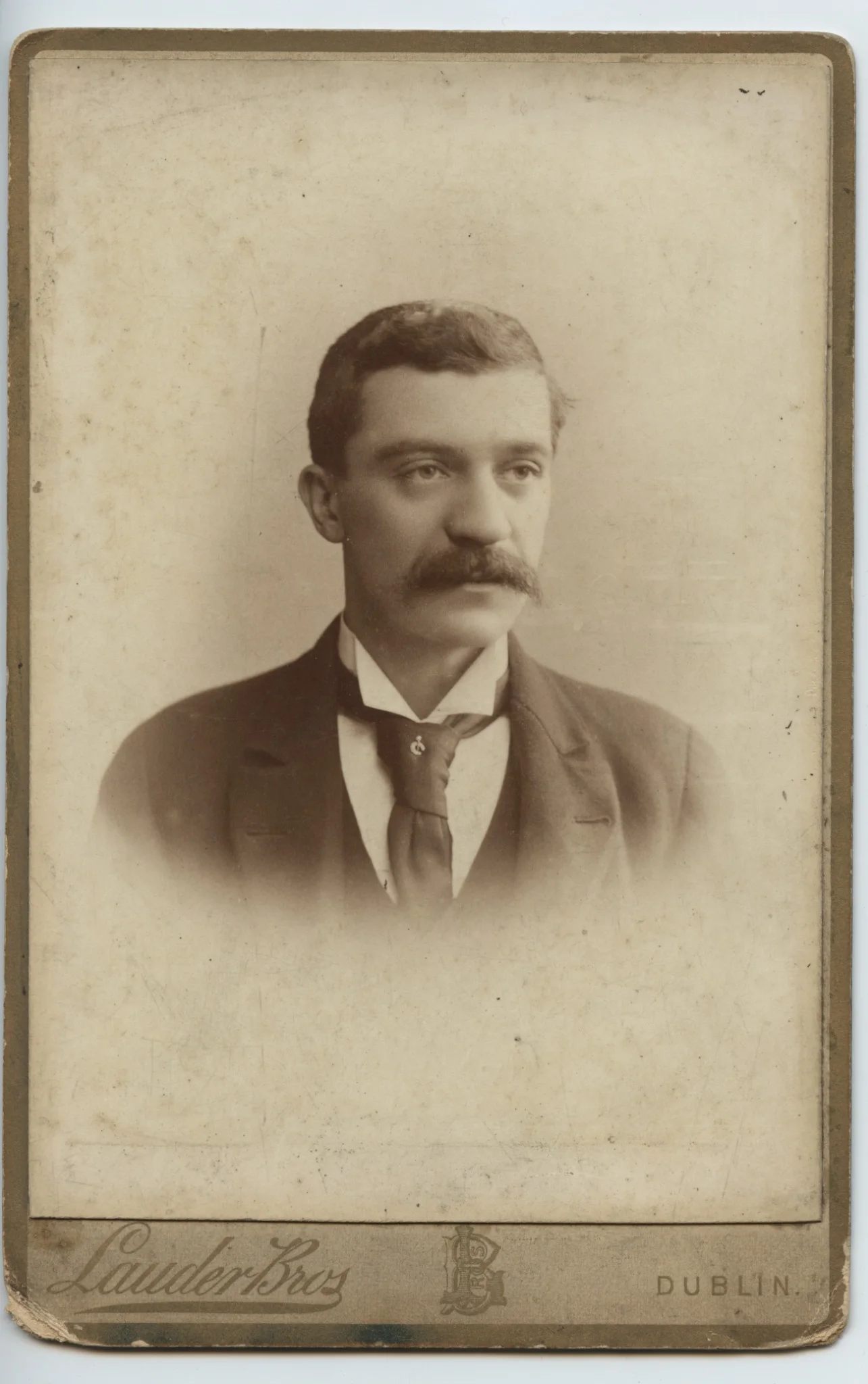
The history of Lauder Brothers, Dublin, begins with Edmond Stanley Lauder, who established a photographic business in the city during the early 1850s. Photography was still a relatively young commercial trade, but new processes soon made portraits more accessible. The family business expanded during the age of the ambrotype and the carte de visite, the small photographic portrait mounted on card that could be exchanged, collected and kept in albums.
The Dictionary of Irish Biography records Lauder Brothers at 45 Lower Sackville Street and at 22 and 32 Westmoreland Street. These were not incidental addresses. They placed the business along the central Dublin corridor sometimes called the photographic mile, where photographers competed for passing customers, commissions and reputations.
Today, Lower Sackville Street forms part of O’Connell Street. A studio address printed on the reverse of a portrait can therefore connect a personal likeness with the changing geography of Dublin itself. The location of the business is part of the historical evidence, not merely an advertisement.
What the National Library’s collections preserve
Lauder Brothers is not known solely through trade directories and later biographies. Original photographs attributed to the studio survive in institutional collections. The National Library of Ireland’s Duggan Photographic Collection includes works by Lauder Bros. alongside portraits from Lafayette, Chancellor, Lawrence and other Irish studios. Its holdings encompass several early photographic formats, including cartes de visite.
A particularly revealing example appears in the Library’s Invincibles cartes de visite collection: a portrait of Irish nationalist John O’Leary catalogued under Lauder Bros., with a studio crest on the reverse identifying 45 Lower Sackville Street. It is a reminder that a Dublin commercial photographer could create images that later acquired significance far beyond the original sitting.
Other portraits had more private destinations: family albums, domestic mantelpieces and correspondence between relatives. Those uses are less visible in political histories, yet they formed the everyday trade that kept Victorian photographic studios in business.
From Lauder Brothers to Jacques Lafayette
One of Edmond Lauder’s sons, James Stack Lauder (1853–1923), took the family’s photographic ambitions in a new direction. After experience abroad, he opened a studio at 30 Westmoreland Street in 1880, using the French-styled professional name Jacques Lafayette. The presentation deliberately distinguished the new venture, while drawing on the skills and commercial foundation of the Lauder family.
According to the Dictionary of Irish Biography, Lafayette’s portraits were praised in photographic exhibitions during the 1880s. In 1887, he was commissioned to photograph Queen Victoria in her jubilee year and received a royal warrant. The enterprise later expanded beyond Dublin to Britain. The studio’s own historical account traces its foundation to the same family business.
It is important, however, not to collapse the names Lauder Brothers and Lafayette into one undifferentiated imprint. They are closely connected, but a photograph carrying a Lauder Bros. mount should be described under the name actually printed on the object. That distinction matters to the history of the studios and to the individual photographs that survive.
The portrait as a record of ordinary Dublin
Most Victorian portraits do not identify their sitters. An unidentified gentleman or woman may still tell us about photographic commerce, clothing, presentation and the ways families chose to be remembered. The mount, studio imprint, card size and any handwritten marks can be as historically revealing as the image itself.
The National Library’s Sally and Carole Johnston photographic collection preserves further examples from Lauder Bros., E. & J. Lauder and Lafayette, together with other Dublin photographers. Such collections demonstrate why studio portraits should be studied not simply as isolated likenesses but as products of a thriving urban industry.
Our current Antique Irish Photography catalogue includes several portraits described as originating from the Lauder Studio. The examples vary in format and size; their subjects are not identified in our records. Their direct connection to this article is the Dublin photographic studio named in their cataloguing, rather than any claimed connection to the famous people photographed by Lafayette.
Related material currently available
These original studio photographs from Ten Bells Auction House inventory provide tangible examples of the Victorian portrait trade described above. Each listing includes photographs of the object and its available cataloguing details; availability and prices are shown on the individual pages.
Victorian Dublin Lauder Studio portrait, larger mounted format (catalogued c.1880s).
View the original Lauder Studio photograph →
Victorian portrait of a woman, Lauder Studio, 32 Westmoreland Street (catalogued 1880s).
View the original Westmoreland Street portrait →
Victorian portrait of a gentleman, Lauder Studio, larger mounted format (catalogued c.1880s).
View the original gentleman’s portrait →
Explore all Antique Irish Photography · Read our overview of Victorian Dublin photographic studios
Sources and further research
- Dictionary of Irish Biography — James Stack Lauder (‘Jacques Lafayette’), Peadar Slattery, 2009.
- National Library of Ireland — Duggan Photographic Collection.
- National Library of Ireland — Invincibles cartes de visite collection, including John O’Leary portrait by Lauder Bros.
- National Library of Ireland — Sally and Carole Johnston photographic collection.
- Lafayette Photography — studio history.
- Lafayette photographic archive — history of the Lafayette studio.